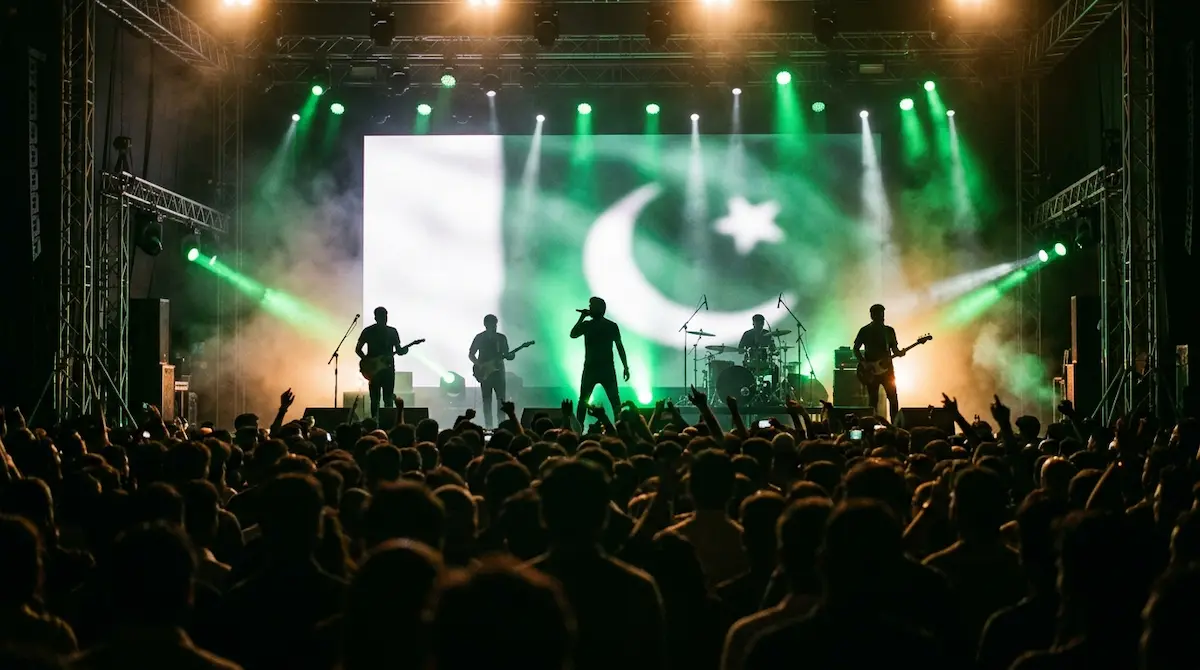
ISPR Song 2026: Release Date, Cast and Where to Watch
Every August, one question moves faster than any other in Pakistan: has the ISPR song come out yet? This year the answer is yes — but it did not arrive the way most people expected. Instead of one big Urdu anthem landing first, ISPR opened its Independence Day 2026 slate with two regional-language songs from Balochistan.
Status as of 11 August 2026: ISPR has released at least two Independence Day songs so far — a Balochi track, Pak Ae Watan, on 9 August, and a Brahvi-language song on 10 August. A flagship Urdu national song has not yet appeared on ISPR’s official channels. We update this line each time a new release is confirmed.
Pak Ae Watan — the Balochi song (released 9 August 2026)
The first confirmed Independence Day 2026 release is Pak Ae Watan, a Balochi-language patriotic song.
| Title | Pak Ae Watan (also written Pak Aye Watan / Pak Ay Watan) |
| Language | Balochi |
| Singer & composer | Akhtar Chanal Zahri |
| Music | Sami Khan |
| Production | Multiverse Entertainment |
| Released | 9 August 2026 |
Akhtar Chanal Zahri sings it in the traditional, high-energy style he is known for. The lyrics carry a straightforward idea: that Pakistan is not just territory on a map but part of who its people are, and that its people are willing to sacrifice for it. Reporting on the release described the song as a message of unity, solidarity and brotherhood, framed through Balochistan’s own musical vocabulary — its rhythms, its colours, its language.
Prime Minister Shehbaz Sharif shared the video on his social media account the same day, thanking the singers, performers and producers and saying the song captured the spirit of love for the homeland. That endorsement is a useful verification signal in its own right: when the PM’s official account posts a track, it is not a fan re-upload.
The Brahvi song (released 10 August 2026)
A day later, ISPR followed with a second song, this time in Brahvi — another language of Balochistan, and one that rarely gets a national platform of this size.
Radio Pakistan reported the release on 10 August, describing it as reflecting the Baloch people’s deep love and strong bond with Pakistan. At the time of writing, the official coverage has not published a title for this track, so we are not naming one. Several unofficial titles are already circulating on social media; treat all of them as unverified until ISPR posts it.
Why two Balochistan songs first?
The pattern is worth noticing. ISPR’s Independence Day slate for 2026 opened with two songs from the same province, in two different regional languages, rather than a single Urdu ensemble anthem. Regional languages have appeared in ISPR productions before, but usually folded into a larger multilingual track. Giving Balochi and Brahvi their own standalone releases — with the country’s most recognisable Baloch folk voice fronting one of them — is a deliberate framing choice, and it lands during a period when Balochistan’s place in the national conversation is heavily contested.
Is a main Urdu song still coming?
Possibly. In recent years ISPR has released more than one song per Independence Day cycle. In 2025, Dil Se Pakistan came out on 2 August, and Jaan Se Pyara Pakistan followed on 6 August, timed to the 78th Independence Day and to Marka-e-Haq. So a further release before or on 14 August would fit the recent pattern.
But it is not guaranteed, and we will not announce one until it appears on an official account.
ISPR songs — recent years
ISPR does not release only for 14 August. The calendar also includes Pakistan Day on 23 March and Defence Day on 6 September, and the songs are constantly confused with each other online. Here is the recent record:
- 2026 (Independence Day) — Pak Ae Watan, Akhtar Chanal Zahri, Balochi, released 9 August
- 2026 (Independence Day) — untitled Brahvi-language song, released 10 August
- 2026 (Pakistan Day) — Meri Mitti Meri Jaan, Pakistan Zindabad, released March 2026
- 2025 (Independence Day) — Jaan Se Pyara Pakistan, released 6 August 2025 for the 78th Independence Day and Marka-e-Haq
- 2025 (Independence Day) — Dil Se Pakistan, released 2 August 2025
- 2025 (Pakistan Day) — Sab Ka Shajra Pakistan, Atif Aslam
- 2024 (Pakistan Day) — Pooche Jo Naam Koi, an ensemble with Sanam Marvi, Natasha Baig, Raisa Raisani, Bilal Ali, Zeek Afridi and Wasiq Malik
- 2023 (Defence and Martyrs Day) — Qurban Huye, Rahat Fateh Ali Khan
- 2022 — a national anthem remake for the 75th Independence Day, released by the Government of Pakistan with a large ensemble cast
- 2020 — Dhanak Kay Rang, a compilation album pulling together tracks from several national occasions
How to tell a real release from a fake one
Every year, fake titles, AI-generated tracks and re-uploaded old songs spread across YouTube, Facebook and TikTok in the days before 14 August, dressed up with the current year in the title. Two of the top search results for “ISPR song 2026” right now are neither ISPR nor 2026.
Check the uploading channel, not the video title:
- Official sources only. ISPR Media’s own YouTube channel and ISPR’s verified social accounts. Nothing else is the source.
- Cross-check the coverage. A real ISPR release is reported by Radio Pakistan, PTV and the major newspapers within hours. If a track has 400,000 views and zero press coverage, it is not an ISPR song.
- Be suspicious of thumbnails. Heavy flag overlays, large yellow text, and a title stuffed with “2026 | NEW | OFFICIAL” are the signature of channels farming search traffic.
- Regional-language tracks are the easiest to fake this year. Because the Brahvi song’s title has not been officially published, expect invented titles to spread quickly. Wait for the official post.
Where to watch
- ISPR Media on YouTube
- ISPR’s verified social media accounts
- PTV
- Radio Pakistan
We link the official videos here as each one goes up.
While you wait — our milli naghmay catalogue has the credits for the classics: who wrote them, who sang them, and what year they appeared.